Subtitling Holocaust Survivor Testimonies: Why Privacy Isn't Optional
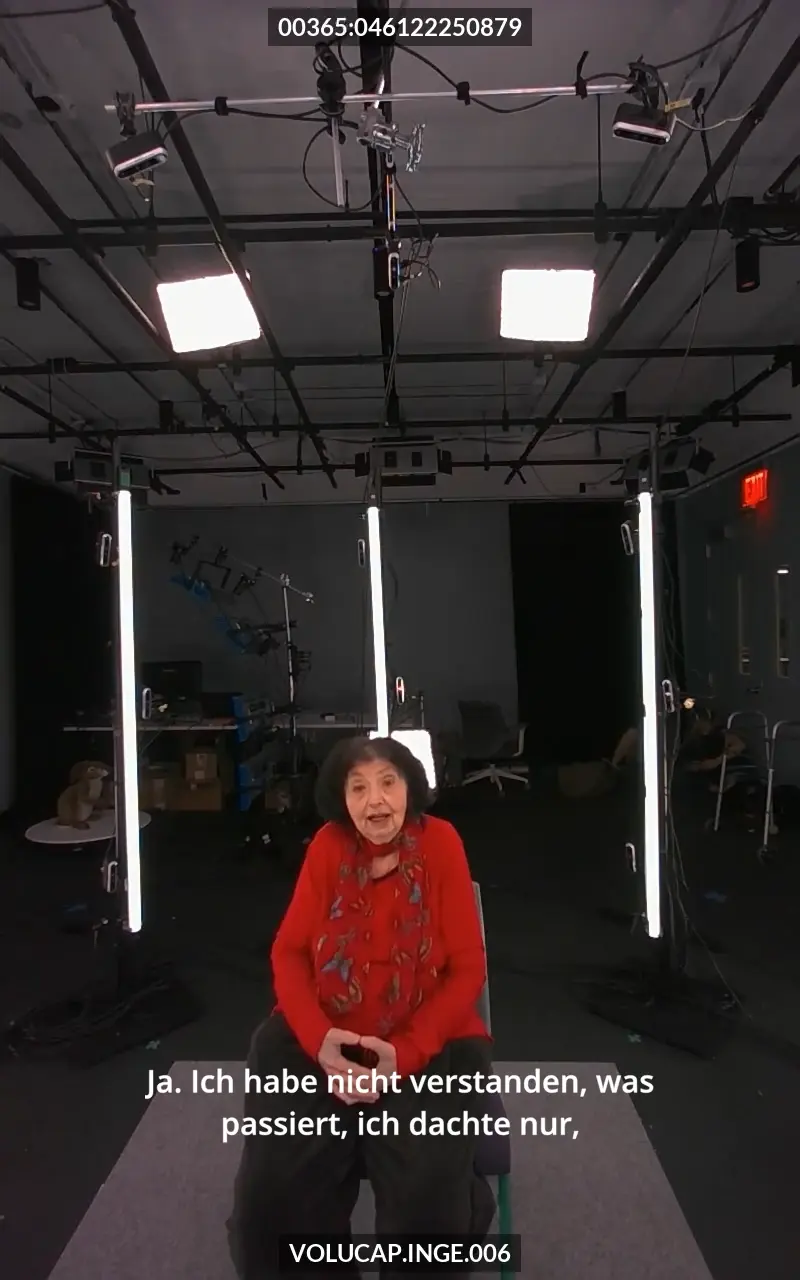
This post is based on conversations with a subtitler working on Holocaust documentation. We’re sharing their experience with permission.
Some days, I sit in a quiet editing suite watching a survivor’s face on my screen—eyes that have witnessed things I can only try to understand—and I think about the weight of getting this right.
Not just accurate words. Accurately timed words. Words that honor the pauses, the breath, the tremor in a voice.
I subtitle testimonies of Holocaust survivors. These interviews will outlive us all, housed in museums and educational institutions, available to future generations. The subtitles aren’t just accessibility features—they’re part of the historical record.
They need to be right.
Why This Work Is Different
Holocaust survivor interviews aren’t typical documentary work.
A single interview might include a survivor speaking English, then switching to Yiddish when recounting childhood memories, then German when recalling the camps. Our archive includes testimonies in over a dozen languages.
And then there’s the privacy question.
These are sensitive personal narratives. Some survivors shared details they’ve never told anyone. The ethical commitment to them means their voices, their stories, their faces—all of it stays within our control.
No cloud uploads. No third-party algorithms analyzing their trauma. No AI companies training datasets on survivor testimony.
I couldn’t use commercial transcription services. Even if they promised privacy, the very act of uploading felt like a violation of trust.
Why Offline Transcription Became Non-Negotiable
Everything happens on a single machine. Video import, transcription, editing, export. Nothing leaves the device.
I work on a dedicated computer with no external network connection during active sessions. The survivors and their families know their words stay contained.
That matters more than any marketing promise could.
The Actual Workflow
I import video directly into WhisperScript. The built-in video player is essential—I can see the speaker, read their body language, understand context. That’s important when you’re working with testimony. You need the whole picture.
WhisperScript runs auto-transcription. It handles linguistic variety surprisingly well. Yiddish names. Polish place-names. German phrases. It’s not perfect—no AI system is—but it gives me a foundation to work from.
Then comes careful review. Section by section, listening closely. Correcting errors. Adjusting timing. Catching places where words were mumbled or audio quality dipped.
This is the precision work. This is where my expertise matters most.
The Multilingual Reality
One interview I worked on last month involved a survivor who speaks four languages fluently. Within a single half-hour segment, she moved between English, Yiddish, German, and back—naturally, unselfconsciously, the way multilingual people do.
WhisperScript’s 100+ language support meant I could work through this complexity without fragmenting the workflow. I could see the entire arc of her testimony preserved with linguistic integrity.
I did have to manually adjust some segments where language switching confused the auto-transcription. That’s expected. But the foundation was solid.
Making Subtitles Readable
Survivor interviews often involve longer monologues. Someone might speak for several minutes without interruption, reflecting deeply.
Auto-transcribed segments need reorganization to work as readable subtitles. No one wants a wall of text on screen. I use merge-by-sentence features to reorganize segments so subtitles are clear and digestible while preserving verbatim content.
Character limit customization helps too. Different archival contexts have different technical requirements. Being able to adjust limits within the same tool keeps my workflow unified.
What This Work Means
Using technology to preserve testimony feels important and fragile at the same time.
Every interview I complete is another voice preserved. Another testimony secured. Another piece of human memory documented with care.
The technology matters, yes—but only because it serves the human commitment to remember well.
WhisperScript is available at €18/month, €108/year, or €249 lifetime. Learn more at getwavery.com.