Why I Stopped Using Cloud Transcription (And What I Use Instead)
A few years ago, I was transcribing an interview with a source who’d asked to remain anonymous. Standard stuff for the kind of work I do. I uploaded the audio to a cloud transcription service, got my text back, and moved on.
Six months later, that service had a data breach.
My source was fine—the breach didn’t expose their identity. But it could have. And that near-miss changed how I think about transcription tools.
What Actually Happens When You Use Cloud Transcription
Let me walk through what happens when you click “upload” on most transcription services:
Your audio leaves your device. It’s in transit, moving through infrastructure you don’t control.
It’s stored on someone else’s servers. The service keeps copies for backup, compliance, and often for training their AI models.
Third parties can access it. Contractors, subprocessors, support staff. The terms of service usually permit this.
It stays there even after you delete it. Fragments persist in backups, logs, training datasets.
For most content, this is fine. If you’re transcribing a published podcast, who cares?
But if you’re handling sensitive interviews, confidential client conversations, unreleased creative work, or anything involving sources who trust you—this architecture is a liability.
What “Offline Transcription” Actually Means
When I say offline transcription, I mean something specific:
- The AI model runs entirely on your device
- Your audio never leaves your computer
- Processing happens locally, in real time
- You own your data completely
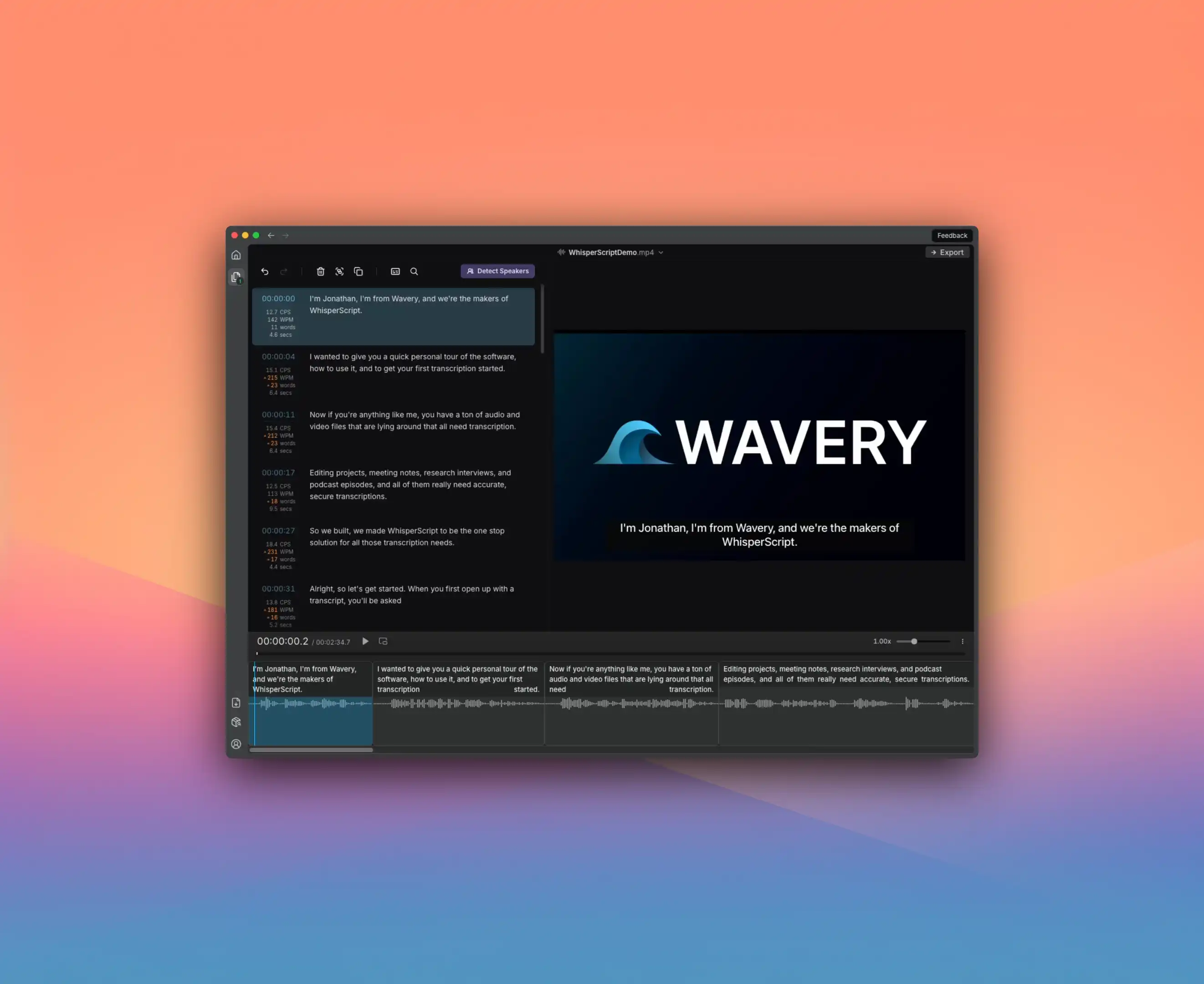
WhisperScript works this way. When you hit transcribe, everything happens on your machine. There are no servers to breach because there are no servers involved.
The tradeoff is that your computer does the processing work. But modern laptops handle this easily. My M1 MacBook transcribes faster than real-time.
Who Actually Needs This
Not everyone does. If you’re transcribing team meetings or published content, cloud services are fine.
But if you fit any of these profiles, offline transcription should be non-negotiable:
Journalists protecting sources. Cloud transcription creates an audit trail of who spoke to you, when, and what they said. That’s liability you don’t need.
Researchers with ethics requirements. Your IRB approval probably requires data security measures. Cloud transcription may violate those commitments.
Legal professionals. Attorney-client privilege gets murky when you’re uploading privileged conversations to third-party servers.
Filmmakers with unreleased content. Your footage, interviews, and B-roll shouldn’t be sitting on someone else’s servers for months before release.
The Hidden Costs of “Convenient”
Most transcription discussions focus on monthly pricing and processing speed. That misses the real costs:
Trust erosion. Every time you upload sensitive data, you’re asking your sources to trust organizations they’ll never meet.
Compliance burden. GDPR requires you to prove where data is stored, who can access it, how it’s protected. Cloud services make this complicated.
Reputational risk. If your transcription service gets breached and your sources are exposed, that’s on you.
Verification overhead. With cloud services, you have to read terms of service, trust compliance claims, hope their vendor chain is secure. With offline tools, there’s nothing to verify.
An €18/month cloud service seems cheap until you factor in these hidden costs.
A Simple Checklist
If you’re evaluating transcription tools, ask these questions:
- Does transcription happen entirely on my device?
- Are there any cloud uploads, even optional ones?
- Can I use it completely offline?
- Where are transcripts stored?
- Does the provider retain copies after I delete them?
If a tool can’t clearly answer these—especially the first three—it’s prioritizing convenience for the vendor over privacy for you.
What I Use Now
WhisperScript. It supports 100+ languages, works completely offline, and costs €18/month (or €249 lifetime if you want to own it outright).
I transcribe on airplanes, in coffee shops, in locations with no internet. My data stays mine. No negotiations with vendors over who gets to see my work.
For the kind of work I do, that’s not a luxury. It’s table stakes.
Elle works on developer experience at Wavery. She’s particular about data hygiene.